
Me and Earl and the Dying Girl
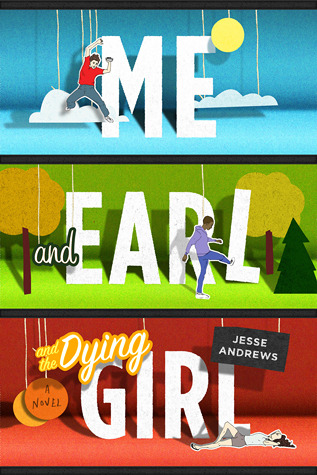
By: Jesse Andrews
Goodreads Summary: This is the funniest
book you’ll ever read about death. It is universally acknowledged truth that
high school sucks. But on the first day of senior year, Greg Gaines thinks he’s
figured it out: the answer to the basic existential question, how is it
possible to exist in a place that sucks so bad? His strategy: Remain at the periphery
at all times. Keep an insanely low profile. Make mediocre films with the one
person who is even sort of his friend, Earl.
This
plan works for exactly eight hours. Then Greg’s mom forces him to become
friends with a girl who had cancer. This brings about the destruction of Greg’s
entire life.
What is it? Witty cancer story that isn’t
actually a cancer story with no romance and no paranormal anything and a main
mood of awkward sarcasm and blunt honesty written as if speaking to the
audience (mainly second person) about events of the past.
My
Rating: B-
Review:
Okay, let me just start by addressing a
common misconception as well as my own first impression of the story by simply
reading the summary. My first thought was of The Fault in Our Stars, but I am here to tell you it’s just. Not
that. At all. The only similarity was that there was a girl with cancer, and
while that may seem like a big similarity, after reading the book it almost
reminds me of comparing To Kill a
Mockingbird (Harper Lee) and Mockingjay
(third Hunger Games novel, Suzanne Collins) because hey, look at that, there’s
a bird in both. So just, get that out of your head, because no. It’s not that.
At all.
Now on to the actual book.
When I finished Me and Earl and the Dying Girl by Jesse Andrews, my first thought
was honestly, “What…did I just read…?”

This book was weird. Wonderfully weird,
but weird none the less. The narrator tells the story as if he were the one
writing the book. I’m not usually a fan of that style of writing, but I think
for this story it worked well and wasn’t too distracting from the actual plot.
If anything, it allowed for more humor to be added to the story.
The plot itself seemed a bit
problematic at times, but in an odd sort of way. This book was stylized as if
it had been written by a teenage boy, so sometimes I couldn’t tell if the straying
of the plot was on purpose due to that style… or if the plot really was just
kind of loose and generally lacking a clear format. So whether I should be criticizing
that part or applauding the author for a great sense of narrator and really
sticking true to that voice is not really clear.
A few other sticky situations I found: The narrator himself is very…self-deprecating. A few times humor is poked at as the narrator says things such as “I’m not even sure why you’re still reading this book,” and “I’m positive you will have stopped reading this book by now.” The first couple times it was funny, but after a while it gets a bit much and it starts to feel less like a chuckle and more like an eye roll.

The only other not good was…this book had
Hipster Syndrome.
Hipster Syndrome: a condition had by books where the writing pays great attention to how unlike other books it is; the book focuses on its own uniqueness in multiple circumstances.
Except this novel had undercover
Hipster Syndrome, where it attempted to cover it up with its sarcasm and self-deprecation.
But I caught it! I saw through that poorly masked disguise!
But alas, it did still have Hipster Syndrome.
This book loved to play off of how unlike other stories it was. Honestly, if
you’re not like any other stories, let your writing show that, don’t force it
down the readers throats. There were multiple times attention was called to how
in any other story a certain scene would have been a romantic scene or a meaningful
scene or a scene where a great lesson is learned, but in this story it wasn’t
that. I would have liked for this novel to have been less about what it wasn’t
and more about what it was.
The best part about this book was the
characters. The book had a way of not showing much deep, meaningful compassion
through the protagonist, but making it up through the supporting characters.
Crazy college professor dads and overtly hostile best friends and dying girls and
teachers who care maybe a little too much. They were described in a unique, yet
very life like way that really stole the story.
The Really Close to the Best Part but
the Characters Were Just So Good This Other Best Part Had to Be Slightly Less Best
Part Than the First Best Part aka The Second Best Part was the brutal honesty
of the book. This book was like line after line of witty, sarcastic awkwardness
that was only made better by the honesty of the witty sarcasm. The main
characters of this book were teenagers and a lot of stories like to glorify
that. They make the characters mature and smooth talking, while in reality
teenagers just…aren’t that. This book was honest about teenagers. They don’t
talk all smooth and cute nor do they look all smooth and cute or act all smooth
and cute. It was refreshing in an odd way.
Me
and Earl and the Dying Girl was
a good read with solid writing and great characters. The beginning was easy to
fall into and I actually liked the resolution to the story and all that led up
to it, despite the little plot problem. The book was weird, but it was a funky
good weird.

-Sarah Elisabeth
When
the world stops spinning, we're still reading.

No comments:
Post a Comment